
By Teachers, For Teachers.
Because to ‘Be the Change’, you have to ‘Teach the Change’.
Sustainability and Social Responsibility Resources for Curious Classrooms.
We know the reality of the NZ classroom. We know the pressure to teach more subjects, with less time, and limited resources. Think Sustainably was born from a simple desire: to support educators in fostering the next generation of kaitiaki without adding a single extra hour to your planning load.
We believe that helping students care for people and the planet shouldn’t be another burden on your to-do list. It should be the most rewarding part of your week.
Our Approach: Smarter Planning, Deeper Learning
We don’t believe in “filler” activities. We believe in high-impact, enquiry-based learning that integrates perfectly with the resources you already have in your classroom.
-
Leveraged Learning: We’ve done the heavy lifting by mapping our resources directly to the Ministry of Education’s School Journals. You get to maximize the texts you are already using, turning your existing literacy programme into a sustainability-focused enquiry unit.
-
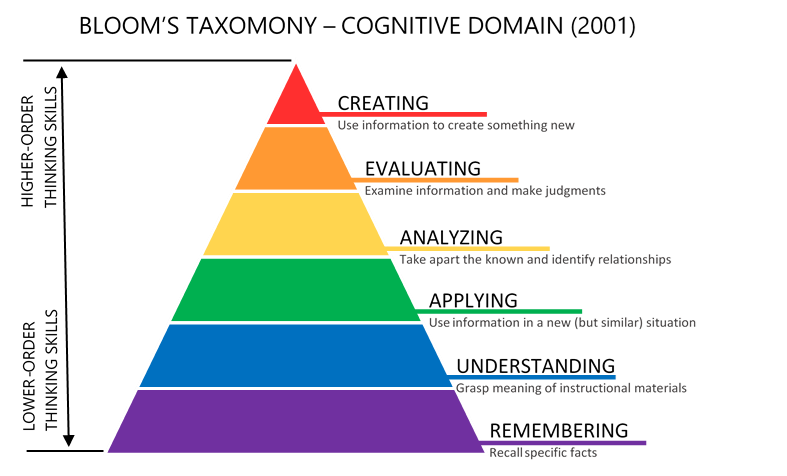
Built for Thinking: Using Bloom’s Taxonomy and other proven thinking tools, our resources guide your ākonga from simple comprehension to complex analysis, evaluation, and creation.
-
The Four Pillars: We help students connect the dots between Nature, the Economy, Society, and Wellbeing. We show them how these systems are interconnected, building the systems-thinking skills they need to navigate the world.
What We Deliver
-
50+ Ready-to-Use Projects: Each one is designed to be downloaded, printed, and taught immediately.
-
Evolving Library: We are constantly adding new resources to keep your classroom library fresh and relevant.
-
Curriculum-Connected: Designed specifically to assist teachers and kura across Aotearoa in navigating the modern curriculum with ease.
Think Sustainably – Let’s do it. Join us in making sustainability a central part of your classroom—not as an “add-on,” but as the foundation for deep, purposeful, and rewarding learning.
Nature, Economy, Society, Wellbeing – they’re all inter-connected.
Nga mihi nui.

There are a number of frameworks for sustainability. The one chosen here suggests describing a sustainable future as being dependable on the interrelationships between four key areas that for simplicity’s sake can be represented by points on the compass: Nature (ecological), Economic, Social – inclusive of citizenship and a fair and equitable political system and Wellbeing – incorporating the various aspects of hauora. These four ‘systems’ can be described as the ‘pillars’ of sustainability, understanding that the health of anyone ‘pillar’ is influenced by and in turn influences the health of the others. You can read more about this topic on our blog here.
Why ‘think sustainably’ ?
In a nutshell – we need to for our children, and we need our children to ‘think sustainably’ if they are to enjoy a sustainable quality of life that those immediate generations born in developed nations post WW2 have for the most part experienced. It is often a surprise amongst many New Zealanders to learn that amongst developed nations we now have one of the most de-graded natural environments globally with approximately 80% of our native species threatened with extinction – the highest of any developed nation. In parallel with this we have some of the worst per capita social indicators amongst OECD nations including: suicide rates amongst youth; homelessness, obesity, incarceration of indigenous people, domestic violence, teenage pregnancy – amongst others. It’s no fluke that that these indicators, inclusive of economic and wellbeing, are inter-dependent. Everything is inter-connected. You can read more about this topic on our blog here.
Suggestions on how you might teach students to ‘think sustainably’.
- Whole class: This is an ideal strategy to scaffold the concept of sustainability for your students.
- Small groups: Ideal for developing co-operative skills – a key aspect of ‘thinking sustainably’.
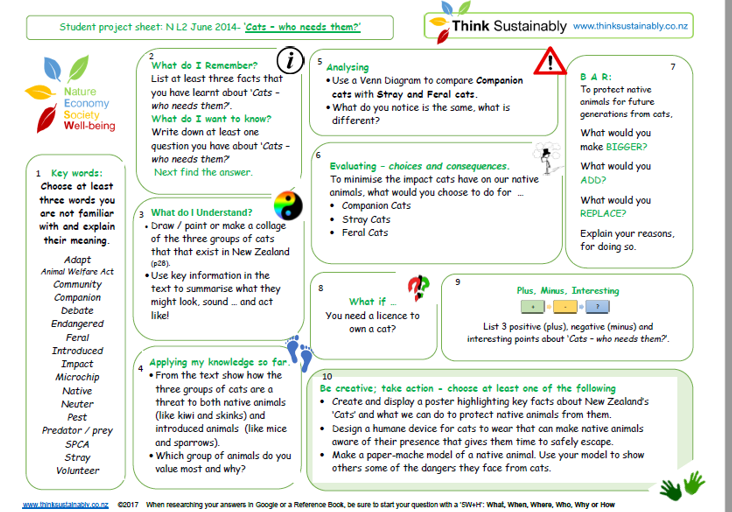
- Independent: Students could independently read the journal text before systematically working through the 10 tasks in the student project sheet.
- As part of your reading program A variety of comprehension strategies can be utilized when reading the text.
- As a homework project.
- As a project for a day relief teacher or CRT.
You can read more about this topic on our blog here.