
Teaching Approach
Because to ‘Be the change’ we have to ‘Teach the change’
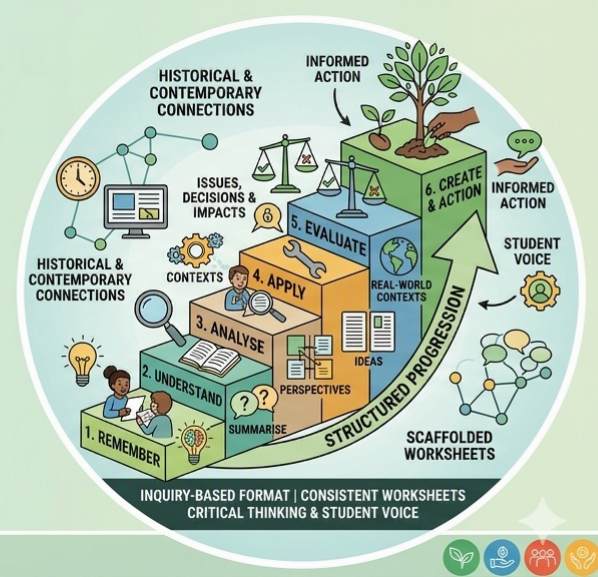
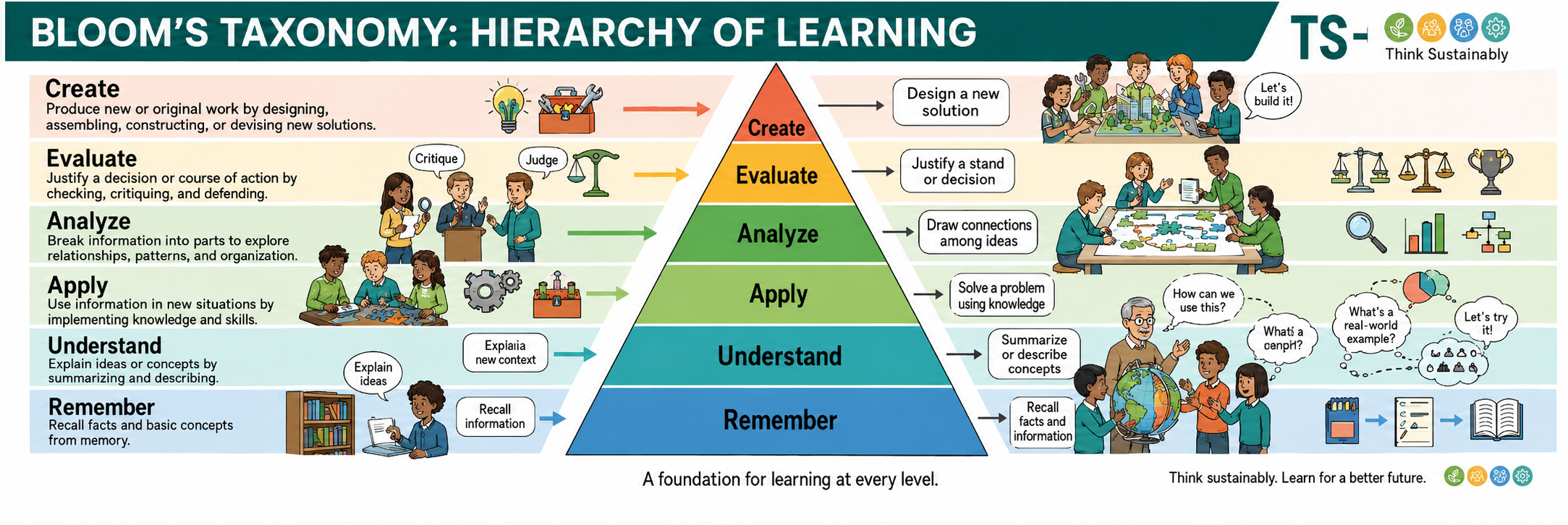
Our teaching approach at Think Sustainably is grounded in Bloom’s Taxonomy, supporting students to progress through increasingly complex levels of thinking. Learning experiences are carefully structured so that students move from building foundational knowledge to engaging in deeper analysis, application, and evaluation of ideas related to sustainability, society, and wellbeing.
Each resource follows a consistent inquiry-based format, reflecting the scaffolded design of our project worksheets. Students begin by remembering key facts and vocabulary and understanding concepts through summarising and questioning. They then move into analysing ideas and perspectives, applying their learning to real-world contexts, and evaluating issues, decisions, and impacts.
This structured progression helps students develop critical thinking skills while making connections between historical and contemporary issues. It also supports student voice by encouraging curiosity, discussion, and informed action. The consistent worksheet format provides clarity and familiarity, enabling learners to focus on deepening their thinking rather than learning new task structures.
Teaching Suggestions
To enhance the structured worksheet approach and support active, collaborative learning, teachers can draw on the following strategies:
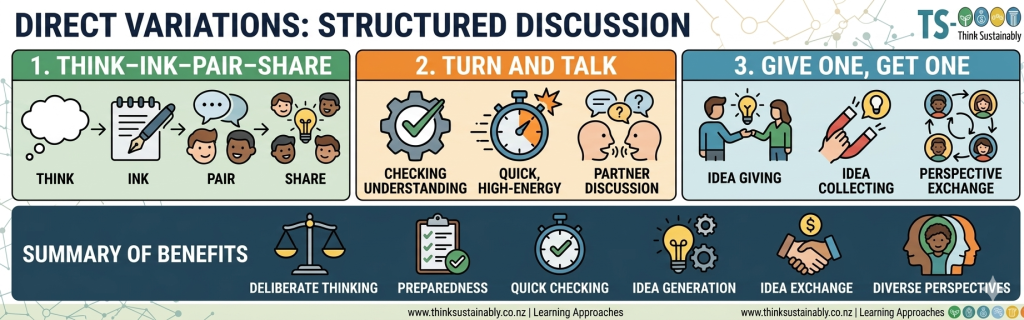
1. Direct Variations (Structured Discussion)
- Think–Ink–Pair–Share
An extension of Think–Pair–Share where students first write down their ideas before discussing them. This supports deliberate thinking and ensures all students are prepared to contribute. - Turn and Talk
A quick, high-energy alternative where students briefly discuss a prompt with a partner. This is effective for checking understanding or generating initial ideas. - Give One, Get One
Students share an idea with a peer and collect a new idea in return. This encourages movement, idea exchange, and exposure to a wider range of perspectives.
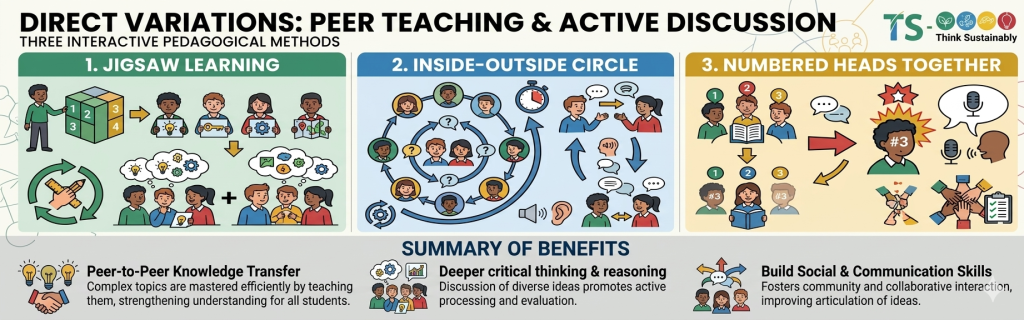
2. Peer Teaching & Active Discussion
- Jigsaw Learning
Students become “experts” in one section of content and then teach it to their peers. This builds accountability and supports synthesis of multiple perspectives. - Inside–Outside Circle (Concentric Circles)
Students rotate through partners in structured discussions, allowing them to practise articulating ideas and hearing diverse viewpoints. - Numbered Heads Together
Small groups collaborate on a question, and one randomly selected student shares the group’s response. This promotes teamwork and ensures all students are engaged and prepared.
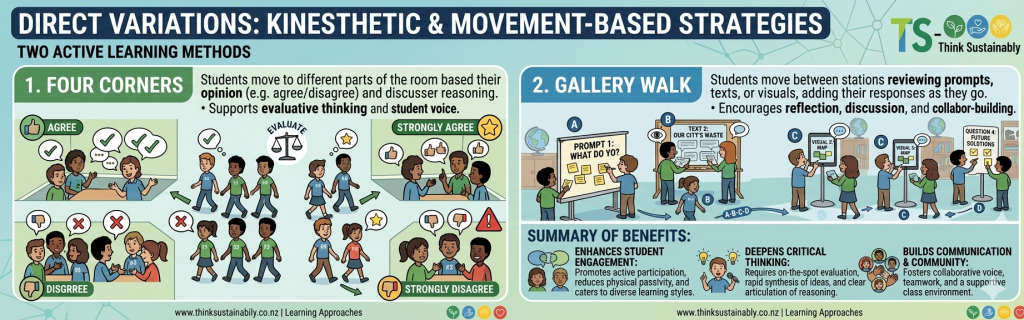
3. Kinesthetic & Movement-Based Strategies
- Four Corners
Students move to different parts of the room based on their opinion (e.g. agree/disagree) and discuss their reasoning. This supports evaluative thinking and student voice. - Gallery Walk
Students move between stations reviewing prompts, texts, or visuals, adding their responses as they go. This encourages reflection, discussion, and collaborative knowledge-building.
4. Embedded Thinking Tools
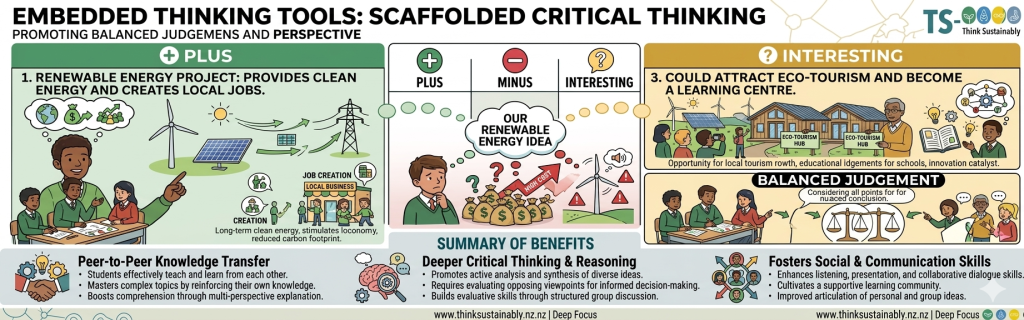
- PMI (Plus, Minus, Interesting)
Already integrated into the worksheets, this strategy supports evaluation by encouraging students to consider multiple perspectives and develop balanced judgements.
Nature, Economy, Society, Wellbeing – they’re all inter-connected.